
Renera brings Brazilian bioinputs innovation to FAO’s World Food Forum in Rome
The initiative raises the international profile of Brazil’s bioinputs industry and strengthens connections to drive innovation, sustainability, and competitiveness in tropical agriculture Renera – Brazilian Bioinputs Hub, an initiative of CropLife Brasil (CLB) in partnership with the Brazilian Trade and Investment Promotion Agency (ApexBrasil), brought Brazilian bioinputs research to the program of the World Food […]
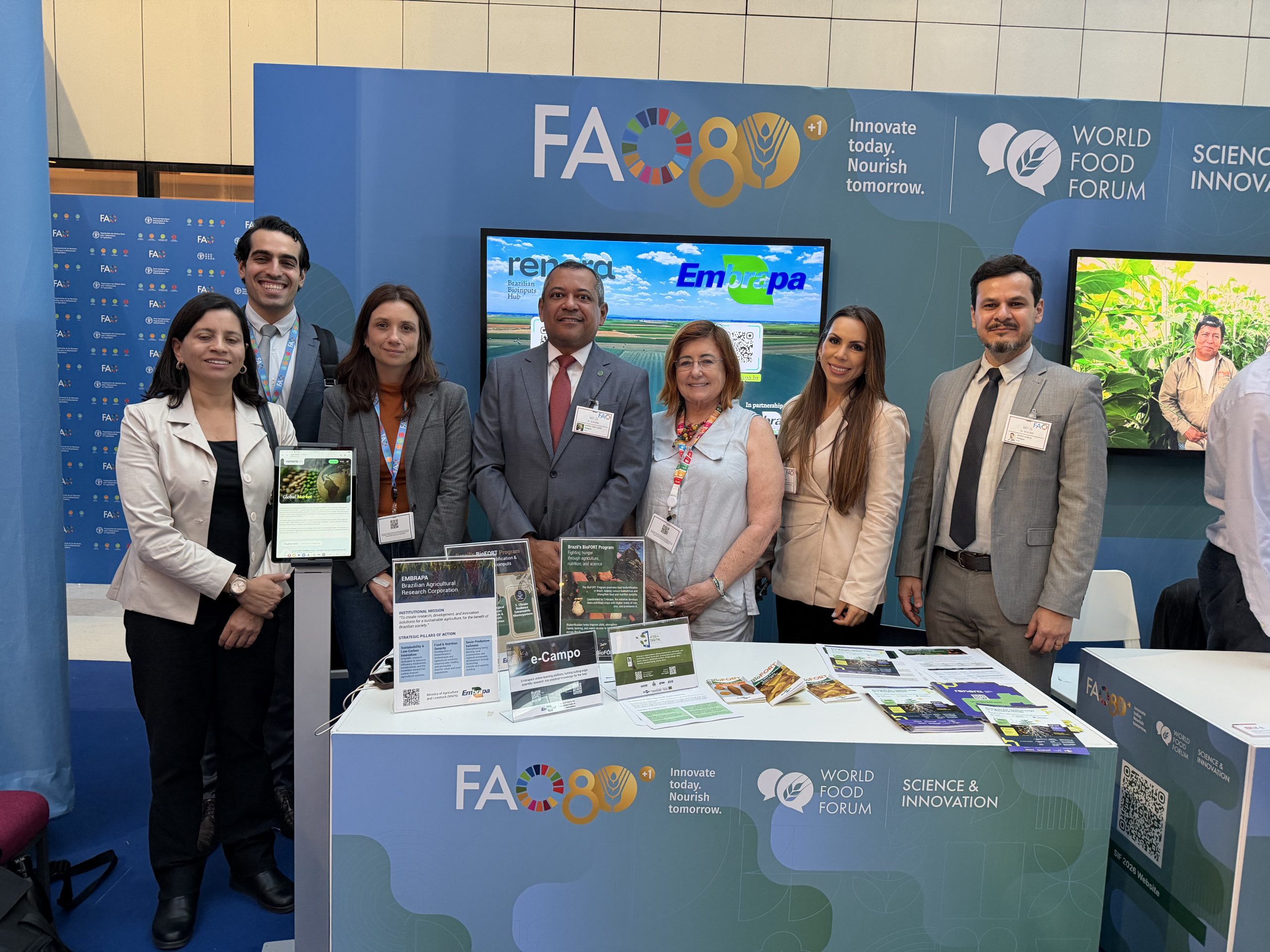
The initiative raises the international profile of Brazil’s bioinputs industry and strengthens connections to drive innovation, sustainability, and competitiveness in tropical agriculture
Renera – Brazilian Bioinputs Hub, an initiative of CropLife Brasil (CLB) in partnership with the Brazilian Trade and Investment Promotion Agency (ApexBrasil), brought Brazilian bioinputs research to the program of the World Food Forum (WFF), organized by the Food and Agriculture Organization of the United Nations (FAO) in Rome, Italy. The initiative invited researcher Rodrigo Mendes, from Embrapa Environment, to present technologies developed in Brazil during the exhibition From Soil to Society: Embrapa’s Science and Innovations that are Transforming Tropical Agrifood Systems (SIF26 Exhibition).
Held from October 8 to 16 at FAO headquarters, the event brings together representatives of governments, research institutions, international organizations, companies, investors, academia, and civil society organizations to discuss solutions for the future of agrifood systems.
Brazil’s participation gives international visibility to microorganism-based technologies that help increase production efficiency, optimize the use of synthetic inputs, and enhance crop resilience in the face of climate change. The initiative also highlights the potential of Brazilian tropical agriculture to serve as a benchmark in the development of innovative and sustainable solutions for food production.
Bioinputs and climate adaptation: contributions from Brazilian science
This participation comes amid growing global demand for technologies capable of increasing agricultural productivity, promoting the efficient use of natural resources, and reducing the vulnerability of production systems to extreme weather events.
During the program, Rodrigo Mendes will present solutions developed by Embrapa that demonstrate the contribution of Brazilian research to advances in bioinputs, including:
– Biological nitrogen fixation: a process carried out by microorganisms that capture atmospheric nitrogen and make it available to plants, reducing the need for nitrogen fertilizers.
– Phosphorus solubilization: the use of microorganisms capable of converting less available forms of phosphorus in the soil into nutrients accessible to plants, supporting plant development and the use of natural resources.
– Water stress tolerance: the use of microorganisms that help increase plants’ ability to withstand periods of water scarcity, supporting their adaptation to adverse climatic conditions.
These technologies illustrate how integrating scientific research and innovation can contribute to agricultural systems that are more efficient, resilient, and adapted to the specific conditions of tropical agriculture.
Renera expands the international presence of Brazilian bioinputs
Participation in the World Food Forum reinforces Renera’s role in promoting biological solutions developed in Brazil internationally and building connections among research institutions, companies, investors, and potential business partners.
For Renata Meliga, Renera project manager, Embrapa’s presence at the event represents a strategic opportunity to increase international recognition of Brazil’s capacity for innovation.
“Embrapa’s presence at the World Food Forum demonstrates the strength of Brazilian science and the potential of bioinputs to transform agrifood systems. For Renera, it is a strategic opportunity to show the world how Brazil leads the development of nature-based solutions and to expand international connections that drive innovation, cooperation, and new markets,” says Renata.
In the view of Ana Repezza, president of CropLife Brasil, Brazil’s participation also highlights a competitive advantage built on the ability to develop technologies tailored to the specific characteristics of tropical agriculture.
“Brazil has a unique combination of conditions to lead innovation in tropical agriculture. We have world-class science, a diverse production environment, and the ability to transform knowledge into technologies that address the challenges of food production. Bioinputs are an important part of this progress and demonstrate how innovation, integrated with different management tools, can strengthen the productivity, sustainability, and competitiveness of Brazilian agriculture. Bringing these solutions to the international stage also means increasing recognition of Brazil as a key player in the future of global agriculture,” emphasizes Ana Repezza.